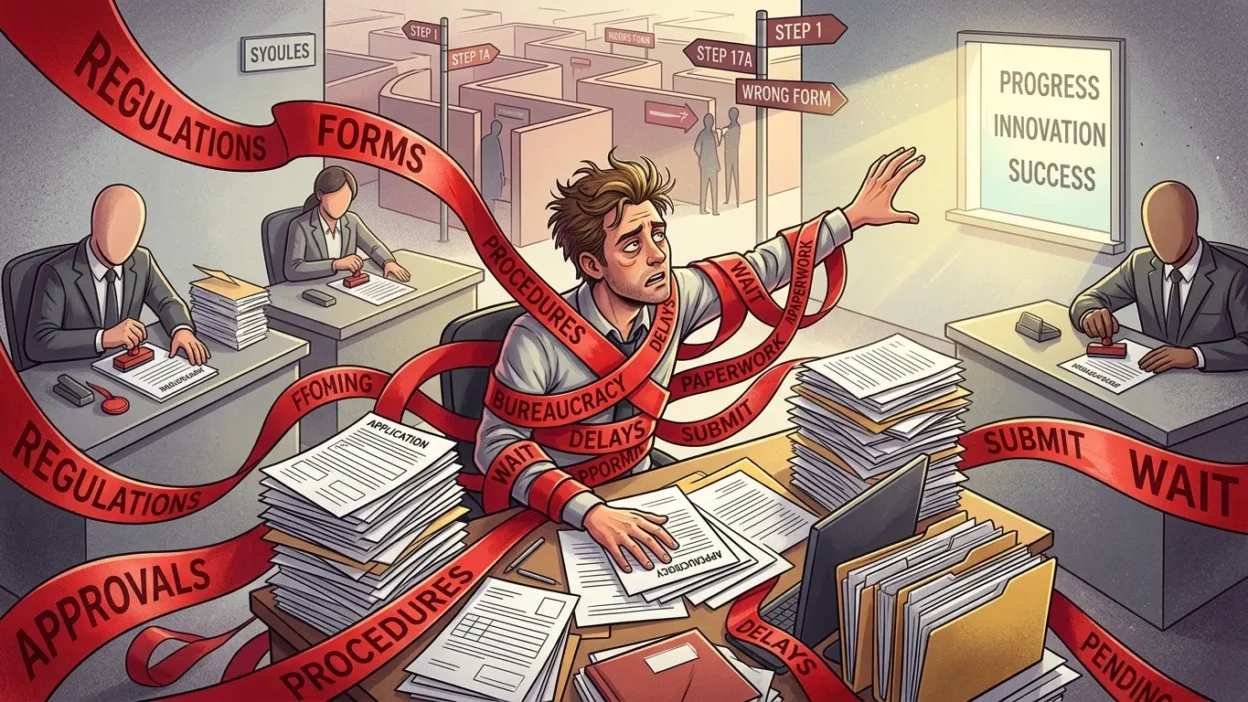
Have you ever heard someone complain about “too much red tape” and wondered what they meant? Maybe you saw the phrase in a news article, workplace discussion, or social media post and felt a little confused. Don’t worry—you’re not alone. Many people encounter this expression for the first time and aren’t sure whether it refers to actual tape or something more symbolic.
The phrase “red tape” is commonly used to describe frustrating rules, paperwork, and official procedures that make simple tasks take longer than necessary.
Quick Answer:
Red tape means excessive bureaucracy, rules, or official procedures that cause delays. It’s a common expression used to describe complicated administrative processes that make things harder than they need to be.
What Does Red Tape Mean in Text?
The term red tape refers to excessive regulations, paperwork, or bureaucratic procedures that slow down progress or make a task more complicated.
Historically, important legal and government documents were tied with red-colored ribbons or tape. Over time, the phrase became associated with complicated official processes and government bureaucracy.
Example:
“We could launch the project today, but there’s too much red tape to get approval.”
In this sentence, red tape means unnecessary rules and procedures that are delaying the project.
In short: Red Tape = Excessive bureaucracy = Complicated rules and paperwork that cause delays.
Where Is Red Tape Commonly Used?
You may see or hear red tape in many different situations:
📱 Social Media
- Twitter/X discussions
- Facebook posts
- LinkedIn workplace conversations
- Online forums
💼 Workplace Conversations
- Office meetings
- Project management discussions
- Human resources processes
- Business planning
🏛️ Government & Legal Topics
- Permit applications
- Licensing procedures
- Tax-related matters
- Public services
📰 News Articles
- Political reporting
- Economic discussions
- Business news
- Government policy analysis
🎓 Educational Settings
- University administration
- Scholarship applications
- Student services
Tone: Red tape is generally neutral but often carries a negative or frustrated tone because it refers to unnecessary complications.
Examples of Red Tape in Conversation
Here are some realistic examples showing how people use red tape in everyday conversations.
Example 1
A: why is the permit taking so long? 😩
B: too much red tape at the office.
Example 2
A: did they approve your business license?
B: not yet 😅 still dealing with the red tape.
Example 3
A: can we start the renovation this week?
B: nope, more red tape to get through first.
Example 4
A: why is hiring taking months?
B: company red tape is slowing everything down.
Example 5
A: your project looks ready! 🚀
B: thanks, now we just need to get past the red tape.
Example 6
A: did you receive the funding?
B: almost. just waiting for all the red tape paperwork.
Example 7
A: what’s causing the delay?
B: honestly, it’s all red tape.
When to Use and When Not to Use Red Tape
✅ When To Use Red Tape
Use the phrase when:
- Talking about complicated procedures
- Discussing government regulations
- Describing workplace bureaucracy
- Explaining delays caused by paperwork
- Complaining about unnecessary rules
- Discussing permits, licenses, or approvals
❌ When Not To Use Red Tape
Avoid using it when:
- Talking about physical tape
- Referring to simple delays unrelated to rules
- Describing personal relationship issues
- Discussing technical problems
- Explaining emergencies or urgent situations
- Writing highly formal legal definitions without clarification
| Context | Example Phrase | Why It Works |
|---|---|---|
| Friend Chat | “The red tape is driving me alternative😅” | Casual and relatable |
| Work Chat | “We’re facing some red tape before approval.” | Professional and clear |
| Business Meeting | “Administrative red tape may delay the launch.” | Appropriate workplace usage |
| Government Discussion | “The project stalled due to red tape.” | Common official context |
| “The application process involves considerable red tape.” | Formal and understandable |
Similar Slang Words or Alternatives
While red tape is a unique phrase, several alternatives express similar ideas.
| Slang/Term | Meaning | When to Use |
|---|---|---|
| Bureaucracy | Administrative system of rules | Formal discussions |
| Paperwork | Documents that must be completed | Everyday conversations |
| Administrative Hurdles | Obstacles created by procedures | Workplace settings |
| Regulations | Official rules and requirements | Legal or government contexts |
| Formalities | Required procedural steps | Professional situations |
| Obstacles | General barriers causing delays | Casual conversations |
FAQ:
1. What does red tape mean?
Red tape means excessive bureaucracy, paperwork, or official procedures that create delays.
2. Is red tape a slang term?
It’s more of an idiom or expression than internet slang, but it’s commonly used in everyday conversation.
3. Why is it called red tape?
Historically, important government and legal documents were tied with red-colored ribbons or tape.
4. Is red tape always negative?
Usually yes, because it refers to unnecessary or frustrating procedures.
5. Can businesses face red tape?
Absolutely. Companies often encounter red tape when dealing with permits, regulations, and approvals.
6. Is red tape used in texting?
Yes, especially when discussing delays, paperwork, or bureaucratic issues.
7. What is an example of red tape?
Waiting months for approval because multiple forms and signatures are required.
8. Is red tape related to government offices?
Often yes, but it can also occur in private organizations.
9. Can students experience red tape?
Yes. Scholarship applications, admissions, and administrative processes may involve red tape.
10. Is red tape the same as paperwork?
Not exactly. Paperwork is part of red tape, but red tape includes unnecessary procedures and regulations too.
11. How do you use red tape in a sentence?
“We lost several weeks because of government red tape.”
12. Is red tape formal or informal?
It can be used in both casual and professional conversations.
13. What is the opposite of red tape?
A streamlined or efficient process.
14. Can red tape delay projects?
Yes. Delays are one of the most common effects of red tape.
15. Is red tape a global expression?
Yes, it’s widely understood in English-speaking countries.
16. Why do people complain about red tape?
Because it often makes simple tasks take longer than necessary.
17. Is red tape common in workplaces?
Yes, especially in large organizations with many approval layers.
18. Does red tape always involve documents?
Usually, but it can also involve procedures and approvals.
19. Can technology reduce red tape?
In many cases, digital systems help simplify bureaucratic processes.
20. What should I remember about red tape?
It refers to excessive rules, paperwork, and bureaucracy that create delays and complications.
Conclusion
The phrase red tape is a popular expression used to describe excessive bureaucracy, paperwork, and complicated procedures that slow things down.
you’re talking about government permits, workplace approvals, or administrative processes, understanding this term can help you better communicate frustrations about delays and unnecessary rules.
It’s commonly used in professional discussions, news articles, and everyday conversations, making it a useful phrase to know.